


Nutmeg Vs Mace: What's the Difference Between These Baking Spices


Bring more flavour to every recipe with the right spice.
One fruit produces two very different baking spices. While most home bakers keep a jar of ground nutmeg within easy reach, mace is often overlooked. What many don't realise is that both spices come from the very same fruit and are available at reputable spice shops like The Spice Trader.
Nutmeg and mace both come from the fruit of the Myristica fragrans tree, but each offers its own flavour, aroma, and culinary uses.
Nutmeg is the hard inner seed of the fruit, while mace is the delicate, lace-like covering that surrounds the seed before being separated and dried. Nutmeg has a sweeter, warmer flavour, while mace is lighter, more aromatic, and slightly peppery.
Understanding the differences between nutmeg and mace helps you choose the right spice for different recipes, allowing you to bring out the best flavour, aroma, and colour in your baking.
Nutmeg and Mace at a Glance
Before exploring each spice in detail, here are some of the core differences between nutmeg and mace -
|
Features |
Nutmeg |
Mace |
|
Part of the fruit |
Inner seed |
Lacy outer covering (aril) |
|
Color |
Brown |
Golden yellow to tan when dried |
|
Flavor |
Sweet, warm, woody |
Peppery, sharp, citrusy |
|
Potency |
Milder |
More concentrated |
|
Best for |
Sweet baked goods, custards, creamy sauces |
Light-colored cakes, clear soups, savoury spice blends |
|
Common form |
Whole seed, grated fresh |
Whole blades or ground powder |
|
Relative cost |
More affordable |
Generally more expensive |
How One Fruit Produces Two Distinct Spices
Nutmeg and mace both come from the fruit of the nutmeg tree (Myristica fragrans). About the size of an apricot, the fruit naturally splits open when ripe to reveal a hard brown seed wrapped in a bright red, lacy covering called the aril. The seed becomes nutmeg, while the aril is carefully removed and dried to produce mace.
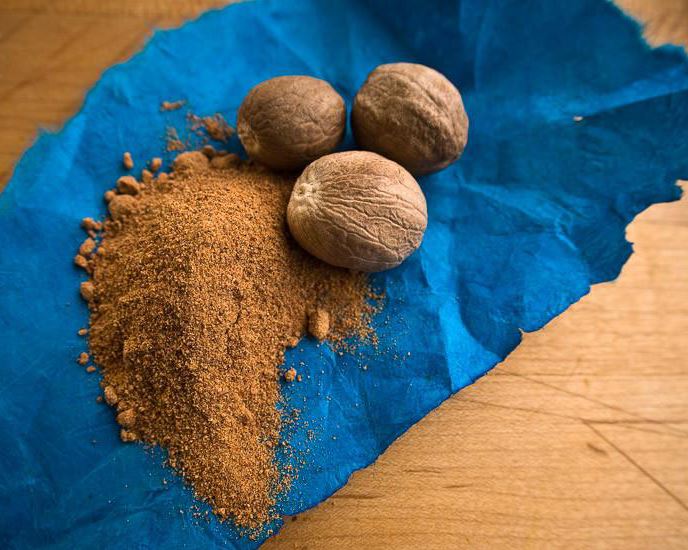
After harvesting, the mace is separated by hand, flattened, and dried until its colour changes from bright red to golden amber. The nutmeg seed is dried separately for several weeks before its hard shell is cracked open to reveal the familiar spice used whole or ground. As both spices come from the same fruit, they share similar warm, aromatic characteristics.
However, they differ in flavour, appearance, and culinary applications. Mace is also typically more expensive because:
- Each fruit produces only a thin layer of aril that becomes mace.
- The aril must be removed and processed by hand with great care.
- The nutmeg seed is larger and yields a greater quantity of spice.
Today, Indonesia remains the world's largest producer of nutmeg and mace. At the same time, Grenada is renowned for its high-quality nutmeg and is so closely associated with the spice that it appears on the country's national flag.
Nutmeg Vs Mace Appearance - Spotting the Difference
Nutmeg
It is a hard, oval seed found at the centre of the fruit. Once dried and removed from its shell, it appears as a rough, brown, egg-shaped seed roughly the size of a large olive.
Nutmeg is most commonly sold whole, allowing cooks to grate it fresh using a fine microplane or a dedicated nutmeg grater. Freshly grated nutmeg preserves its essential oils far better than the pre-ground version, which loses potency quickly once exposed to air.
Mace
It is the lacy, web-like aril that surrounds the nutmeg seed. Fresh mace is a striking reddish-orange, though the drying process turns it a duller golden-yellow or tan.
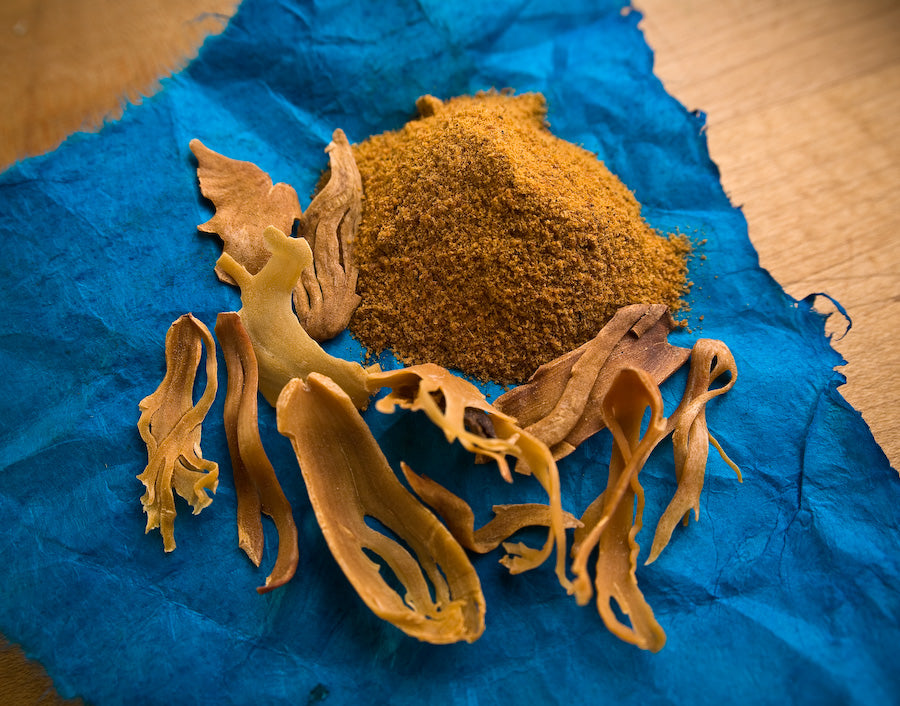
It is typically sold either as flattened whole pieces, known as mace blades, or ground into a fine powder. Whole mace blades retain their flavour longer than the ground form, much like whole nutmeg does.
Flavour Profile - Sweet Warmth Vs Peppery Brightness
This is where nutmeg and mace truly distinguish themselves from one another. Nutmeg delivers a warm, sweet, and woody flavour with a deep, faintly earthy undertone. It pairs naturally with dairy, sugar, and baked goods, which explains its frequent presence in holiday recipes. Even in small quantities, nutmeg adds a rounded, comforting depth that makes desserts taste noticeably more complex.
Mace presents a lighter, more delicate profile on first taste, but carries a sharper, more peppery bite beneath the surface, along with subtle notes of citrus and pine. Many cooks describe it as a more refined version of nutmeg: less sweet, more savoury-leaning, and better suited to dishes where an overly sweet spice note would be unwelcome.
As mace is more concentrated than nutmeg, recipes typically call for a smaller quantity. A dish that requires one teaspoon of nutmeg may need only half a teaspoon of mace to reach a comparable intensity.
Aroma and Nutritional Value of Nutmeg and Mace
Similar Origins, Distinctive Characteristics
Nutmeg and mace come from the same fruit of the nutmeg tree, so they share many of the same natural aromatic compounds and have similar nutritional profiles. However, these compounds occur in different proportions, giving each spice its own distinctive flavour and aroma.
Nutmeg is richer, sweeter, and slightly earthy, while mace is lighter with delicate floral, peppery, and citrus-like notes. Both spices contain myristicin, a naturally occurring compound that contributes to their characteristic fragrance.
Although nutmeg and mace provide small amounts of dietary fibre and minerals such as manganese, magnesium, copper, and iron, they are typically used in small quantities. Their greatest value lies in the warmth, aroma, and depth of flavour they add to sweet and savoury dishes.
Culinary Uses - When to Choose Nutmeg or Mace
Although nutmeg and mace share a similar warm, sweet flavour, each shines in different recipes. Choosing the right one depends on the intensity of flavour you want and the appearance of the finished dish.
Choose Nutmeg For -
Nutmeg has a richer, sweeter flavour that complements both baked goods and savoury comfort foods.
It is commonly used in:
- Pumpkin pie, apple pie, and custard-based desserts
- Eggnog and other spiced beverages
- Rice pudding, cookies, cakes, and muffins
- Béchamel sauce, mashed potatoes, creamed spinach, and macaroni and cheese
Freshly grated nutmeg is often added just before serving to enhance the aroma of both sweet and savoury dishes.
Choose Mace For -
Mace offers a lighter, more delicate flavour with subtle floral and peppery notes. Its pale golden colour also makes it ideal for recipes where appearance is important.
It is commonly used in:
- Light-coloured cakes and pastries
- Custards, puddings, and creamy desserts
- Curry powders, garam masala, and other spice blends
- Cream sauces, clear soups, and delicate broths
Bakers and chefs often prefer mace for a refined flavour without the darker specks that ground nutmeg can leave in pale dishes. It also remains a traditional ingredient in classic recipes such as English fruitcake, doughnuts, and pound cake.
How to Buy and Store Nutmeg and Mace
Whole nutmeg seeds and whole mace blades hold their flavour considerably longer than their pre-ground counterparts. Ground spices lose potency within a matter of months as their essential oils evaporate, while whole nutmeg can remain flavorful for a year or longer when stored correctly.
To preserve freshness:
- Store both spices in airtight containers, away from light, heat, and moisture.
- Keep them in a cool pantry or spice drawer rather than near the stove, where heat accelerates flavour loss.
- Use a small handheld grater for the whole nutmeg, since it takes only a few seconds to grate what a recipe requires.
- Crush whole mace blades with a mortar and pestle or a spice grinder just before use, rather than buying pre-ground mace.
Purchasing whole spices in small quantities from a dedicated spice retailer, rather than large containers from a general grocery store, often results in a fresher and more aromatic product, since speciality suppliers tend to have higher turnover.
A Brief History of Nutmeg and Mace
Nutmeg and mace have been valued for thousands of years. Archaeological evidence shows they were being used over 3,500 years ago on Indonesia's Banda Islands, the only place in the world where the Myristica fragrans tree naturally grew for centuries. From there, these prized spices travelled through ancient maritime trade routes to India, the Middle East, and eventually Europe.
As demand grew, control of the spice trade became highly competitive. Arab merchants kept the location of the Banda Islands secret for many years, making nutmeg and mace rare and expensive in European markets. In the 16th and 17th centuries, Portuguese, English, and Dutch traders competed fiercely for access to the islands and their valuable spice harvests.
The Dutch eventually established control over the Banda Islands and dominated the global nutmeg trade for many years. Later, nutmeg trees were introduced to other tropical regions, including Sri Lanka, Singapore, Zanzibar, and Grenada, where they are still cultivated today. Although nutmeg and mace are now widely available, their remarkable journey reflects centuries of exploration, trade, and global influence.
Other Plants That Produce More Than One Culinary Ingredient
Nutmeg and mace are among the few commercially important spices derived from different parts of the same fruit. While several plants provide multiple edible ingredients, these are typically classified as a combination of a spice and an herb or vegetable rather than two distinct spices.
Here’s a table below to highlight some well-known examples and show how different parts of the same plant are used in cooking -
|
Plants |
Products from the Same Plant |
Classification |
Plant Parts Used |
|
Nutmeg (Myristica fragrans) |
Nutmeg and Mace |
Two Spices |
Nutmeg is the seed, while mace is the bright red aril that surrounds the seed. |
|
Coriander (Coriandrum sativum) |
Coriander Seeds and Cilantro (Coriander Leaves) |
Spice + Herb |
The dried seeds are used as a spice, while the fresh leaves are used as an herb. |
|
Fenugreek (Trigonella foenum-graecum) |
Fenugreek Seeds and Fenugreek Leaves (Kasuri Methi) |
Spice + Herb |
The seeds are used whole or ground, while the leaves are used fresh or dried in savoury dishes. |
|
Mustard (Brassica species) |
Mustard Seeds and Mustard Greens |
Spice + Vegetable |
The seeds are used whole, ground, or to make mustard, while the leaves are cooked as leafy greens. |
|
Fennel (Foeniculum vulgare) |
Fennel Seeds and Fennel Fronds |
Spice + Herb |
The seeds are prized for their sweet, liquorice-like flavour, while the feathery fronds are used as a fresh herb. |
|
Dill (Anethum graveolens) |
Dill Seeds and Dill Weed |
Spice + Herb |
The seeds are commonly used in pickling and spice blends, while the leafy tops are used as a culinary herb. |
|
Celery (Apium graveolens) |
Celery Seeds and Celery Stalks |
Spice + Vegetable |
The seeds are used as a seasoning, while the stalks are eaten as a vegetable. |
|
Caraway (Carum carvi) |
Caraway Seeds and Caraway Leaves |
Spice + Herb |
The aromatic seeds are popular in breads and savoury recipes, while the leaves can be used similarly to parsley. |
Conclusion
Nutmeg and mace may come from the same fruit, but each offers a distinct flavour, aroma, and purpose in the kitchen. Nutmeg brings a rich, sweet warmth to baked goods and creamy savoury dishes, while mace delivers a lighter, more delicate flavour with subtle floral and peppery notes. Knowing when to use each spice allows you to enhance the taste, aroma, and appearance of your favourite recipes with confidence.
Great recipes start with great ingredients. Whether you're baking classic desserts, preparing savoury dishes, or experimenting with new flavours, The Spice Trader offers a premium selection of fresh, high-quality spices to help you achieve exceptional results. Contact us today or explore our collection to find the perfect spices for your next culinary creation.